Be yourself; Everyone else is already taken.
— Oscar Wilde.
This is the first post on my new blog. I’m just getting this new blog going, so stay tuned for more. Subscribe below to get notified when I post new updates.
Be yourself; Everyone else is already taken.
— Oscar Wilde.
This is the first post on my new blog. I’m just getting this new blog going, so stay tuned for more. Subscribe below to get notified when I post new updates.
For me, this module was specifically interesting as our learning could be applied to all facets of society. I read blogs focusing on manufacturing industries, police and defence forces, FinTech firms, marketing platforms and traditional insurance houses to name a few. Despite the wide verity of industries, digitalisation and technology advancements were present in all. My final blog will highlight my learning experiences within the module and detail how I will leverage what I have learned in my professional career.
My first blog centred around how digitisation and technology advancements are changing the traditional job roles. Despite my blog focusing primarily on changes within the betting industry, conducting research for this blog coupled with reading others work, I gained an important insight into how roles change over time. Some grow and gain importance whilst others begin to be phased out through tech advancements. As an individual who is soon to become a graduate, embarking on the ‘job hunt’ I believe that the insights I have gained here are incredibly important. I now understand that some critical reflection is needed when deciding on my chosen career path, analysing the future need and longevity of the roles I am applying for.

My second blog enabled me to gain a comprehensive understanding of the applications for artificial intelligence and blockchain technologies. Admittedly, I first believed both AI and blockchain to be ‘buzzwords’ which referred to human like robots and cryptocurrency. Through my research of these technologies and the insightful information provide in this module, I can now understand the vast array of applications for these technologies which will undoubtedly be at the forefront of commerce for years to come.

I further enjoyed learning about how important it is to create a digital identity which portrays an image of oneself which is inline with how your wish to be represented. In a professional context, I gained a heightened understanding of how important Linkedin activity and digital networking is. I thoroughly enjoyed the seminar in which two past students shared their experiences using Linkedin to aid their careers, this provided relatable and real-world applications to what we have been exploring in the module. The notion of an online identity also increased my conscious of what I should and shouldn’t associate myself with on social media accounts when presenting myself online.

Finally, creating a blog for external readers provided me with key skills with I will continue to harness throughout my professional development. These skills include drawing in an audience, creating insightful and congestible content, and presenting my work in an engaging and accessible manner. I believe that these skills will be invaluable in the workplace when creating and delivering presentations, formulating reports, and participating in knowledge sharing activities.
Flutter Entertainment plc is a sports betting and gaming operator consisting of a large portfolio of premier international brands such as Paddy Power, Betfair, Sportsbet, and FanDule. The now FTSE 100 company began when Paddy Power opened for business with 42 shops in Ireland by merging three local bookmaker chains. Paddy Power’s founder David Power stated that, the original reasoning for the three-way merger was to compete with the British bookmakers who had began entering the Irish market. Throughout a series of mergers and acquisitions Flutter has become a behemoth in a market estimated to be worth £345bn (Flutter Entertainment, 2020).

Technology and digitisation has revolutionised the bookmaking industry, 12% of the market is now said to be online (Flutter, 2020). Within Flutter Entertainment’s 2019 annual report they have attributed quality of online products, technological innovation, ongoing smartphone penetration, and consumer migration from traditional retail, as the catalysts for this online transition. Flutter have been at the forefront of the industries digitisation as they continue to foster a culture of technological innovation. Paddy Power was first betting company to launch an online application (2011) whilst Betfair was the first to offer a ‘cash out’ service (2012). These innovations have greatly appealed to consumers, the ease and greater options presented by gambling online have shifted the market to an online space. Although the groups origins lie in traditional brick-and-mortar outlets their current revenue breakdown illustrates the success of their digitisation. In 2019 Paddy Power Betfair (PPB) Online generated at total of 1bn of revenue whilst Sportsbet, their leading online bookmaker in Australia, was accountable for £446m of 2019’s revenues (Flutter.com, 2020). When looking to the proportion of revenues through PPB Retail the figure lies at £312m in 2018. Although their retail presence continues to account for sizeable proportion of company revenues, the strength of their online outlets exemplifies the success in adopting a digital business model.

Flutter Entertainment realise the positive impact that digitisation is making on their business, because of this, they have committed to ensuring the continued investment and research in new innovative technologies. This investment and research is being carried out through their Alpha Hub which they describe as a, “global virtual community of startups, academics, investors and corporate partners, with technologies and ideas that have the potential to positively enhance the sports betting and gaming industry” (Alpha Hub, 2020). Wide and varying technologies have been explored including research into the possible application for AI and Blockchain technologies in the betting industry. In an insight provided by the Alpha Hub AI application areas were explored, with recommendation engines, fraud detection and customer support, all being relevant areas for the industry. Just like targeted advertisements, AI should be able to analyse how individuals bet (e.g. how much, how frequently, what sports, desired return levels) and provide betting specials tailored to the individual. Individuals who aim to launder money may target the gambling industry due to the high transaction frequencies, because of this, anti-money laundering (AML) teams are in place to screen online users; future developments in AI may enable the automation of this process, further mitigating the risk of fraud (Smith, 2019). Flutter understands the benefits of this technology relating to the speed, accuracy, and cost to their organisation.
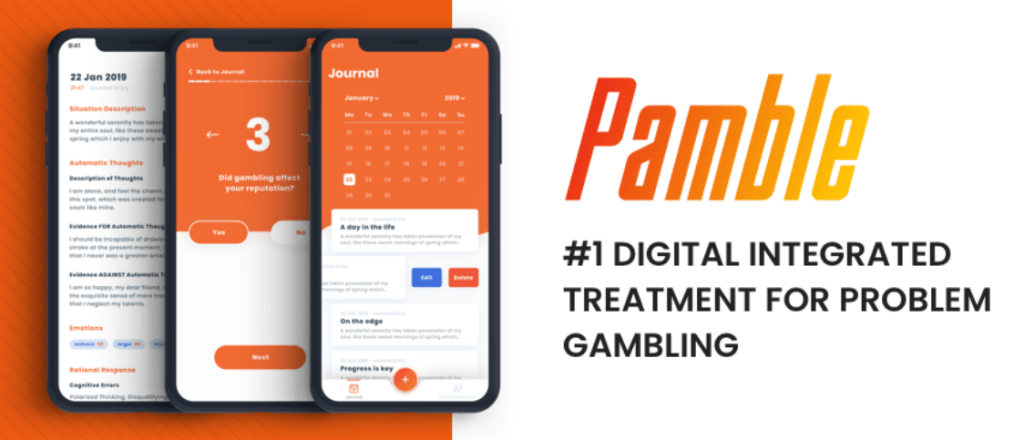
Technology has been incredibly important to Flutter’s success, but it does create potential problems. Due to the addictive nature of gambling, 24/7 access to a bookmaker or online casino may be detrimental for problem gamblers. In traditional brick and mortar bookmakers’ individuals may have elected to self-exclude themselves from shop whilst trying to recover from their addiction; employees may have also identified individuals with harmful habits and provided necessary assistance. Flutter Entertainment has a strong stance on responsible gambling which includes a strategy of educating, investing and innovating in methods to tackle the problem. Within their Alpha Hub, Flutter have chosen Preamble and Mindway AI as winners of the first Alpha Hub accelerator winners. Preamble is a healthtech startup which provides integrated digital treatment for gambling addiction. Alpha Hub helped with knowledge sharing by outlining the challenges companies, such as themselves, face whilst trying to protect their customers, and also provided mentorship to help shape the product (Lupo, 2019). Mindway AI (2020) explains that it, “Provides a panoramic view of every single gambler trajectory by combining neuroscience, artificial intelligence and expert evaluations, empowering you to truly know your customer.” Both of these start-ups are in line with their responsible gambling strategy.
References:
Flutter.com, 2020 Abailable at https://www.flutter.com/our-business/strategy (05/03/2020)
Creating safe customer journeys with Mindway Solution Suite. (2020). Retrieved 6 March 2020, from https://mindway-ai.com/
London Stock Exchange today welcomes Flutter Entertainment plc. (2020). Retrieved 6 March 2020, from https://www.lseg.com/markets-products-and-services/our-markets/london-stock-exchange/equities-markets/raising-equity-finance/market-open-ceremony/welcome-stories/london-stock-exchange-today-welcomes-flutter-entertainment-plc
Lupu, G. (2020). Pamble journey with Alpha Hub accelerator from idea to MVP. Retrieved 6 March 2020, from https://alphahub.tech/pamble-journey-with-alpha-hub/
PokerGuru – Free Online Poker Games, Best Poker Sites in India. (2020). Retrieved 6 March 2020, from https://pokerguru.co.in/
Smith, R. (2020). Accelerating the Adoption of Artificial Intelligence – Alpha Hub. Retrieved 6 March 2020, from https://alphahub.tech/artificial-intelligence/
Strategy. (2020). Retrieved 6 March 2020, from https://www.flutter.com/our-business/strategy
During my travels across America my friends and I took the opportunity to take a pitstop in Las Vegas for the weekend. As one can imagine the excitement was tangible, the bright lights of the ‘Vegas Strip’ were gleaming in our heads and every casino movie we had ever seen was playing in our minds. Although I wouldn’t consider myself as a major gambler, I was excited to have a flutter on the blackjack and roulette tables. As we entered The Venetian, I was keen to catch a glimpse of the casino floor, believing that it would look similar to the one seen in Casino Royal. Upon arrival I quickly realised my image of how the casino should look and how it looked in reality were inherently different. 50% of the floor space was taken up by garish slot machines projecting every colour of the rainbow and another 25% was taken up by ‘virtual’ roulette and blackjack tables. Was I underwhelmed? Yes. Was I surprised? In hindsight no, this was indicative of the direction that the gambling industry has been going for a number of years.
People have been gambling since before written history itself, originally, wagers were simple with two possible outcomes and the odds set at evens (onlingambling.org.uk, 2020). Formal bookmaking originated in the United Kingdom in the 16th and 17th centuries as betting on horses became popular with the aristocracy and the landed gentry (Charpentier, 2019). Since then, the industry has become incredibly advanced; teams of statisticians and actuaries are now tasked with quantifying a vast array of eventualities for consumers to wager against.
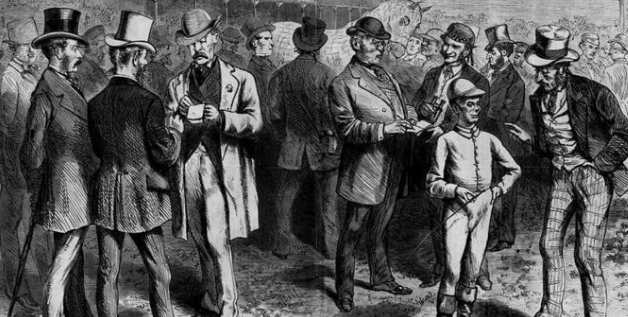
In the not so recent past people would envisage a bookmaker as the individual by the racetrack under an umbrella with a large leather bag filled with seemingly endless amounts of money. Now when people think of bookmakers their minds jump to large scale enterprises such as Paddy Power and Ladbrokes. These corporate entities have become disruptive to the traditional ‘local bookmaker’ and their access to capital has led to increased innovation in the industry.

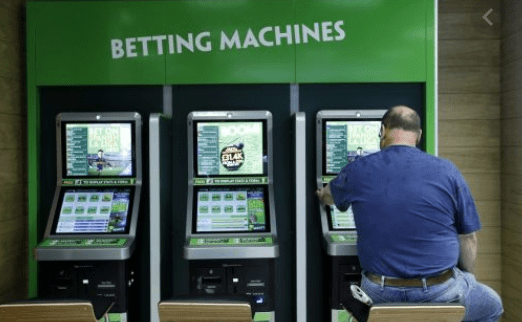
Whilst studying towards my undergraduate degree I worked in Paddy Power as a cashier. This made me realise the changing effects that digitisation was having on the industry, the need to constantly evolve with these changes became paramount as the industry competition was fierce. Although my role still largely consisted of what you would expect I also needed to learn things that people in my position 10 years ago would not have. Paddy Power continuously installed self-service terminals in their brick and mortar trade; a company executive explained, “We think more and more customers will move away from that interaction with a person in a shop” (McMahon, 2017). With the induction of these machines and the roll out of their app my role began to change; a lot of my time was spent educating customers on how to successfully operate the new machines. As well as this, I was tasked with essentially marketing all of the new casino games that were fully integrated on the mobile application.
Statistics show that this transition is affecting the landscape of the gambling industry. From the Statista (2020) graphs we can see how there is an increase in the ‘Gross Gambling Yield’ stemming from online activity and since 2014 is has become the prime source of revenue in the industry.

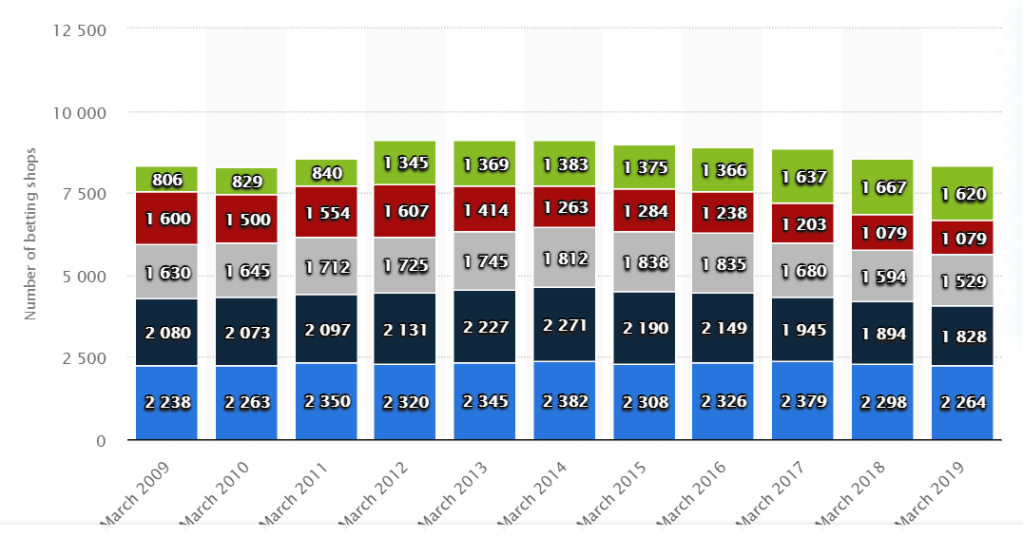
We can also see that both the number of betting shops and individuals employed in the industry is in decline in the United Kingdom. The Statista (2020) graphs below illustrate that, although nominal, the number of betting shops has been in decline since March of 2014. Similar trends are clear when looking at the number of employees employed by the industry regardless of the fact that the value of the industry is growing.
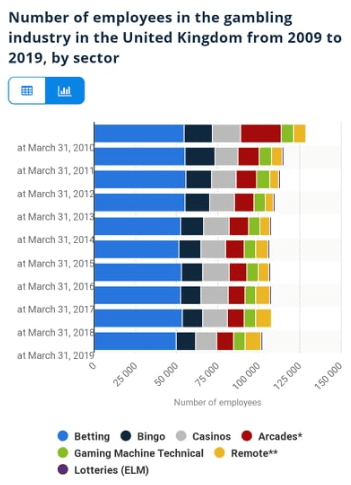
With all this information the trajectory of the industry becomes somewhat clear, continued digitisation will occur. The shop front, brick and mortar betting shop is getting phased out. This phasing out may be slow due to the a reluctancy from older customers who enjoy their traditional task of making a bet in person, but, when younger, tech savvy individuals who enjoy the world at their fingertips become the prominent client base the transition will undoubtedly speed up. What does this mean for the future? Will bookmakers refrain from offering their services on race day? Will the whole gambling industry be online? And who need Vegas when you have Vegas in your pocket?
Bibliography:
Charpentier, A. (2019). A brief history of sports betting. [online] Freakonometrics. Available at: https://freakonometrics.hypotheses.org/58041 [Accessed 14 Feb. 2020].
McMahon, C. (2017). How Paddy Power is using its brick-and-mortar bookies to push spending online. [online] Fora.ie. Available at: https://fora.ie/paddy-power-online-sales-3617878-Oct2017/ [Accessed 14 Feb. 2020].
Onlinbetting.org.uk (2020). History of Gambling, Betting and Bookmakers | First Bookies, Betting Sites and Exchanges | Evolution of British Gambling Law and The Future of Betting | Online Betting UK. [online] Onlinebetting.org.uk. Available at: https://www.onlinebetting.org.uk/betting-guides/history-of-gambling-and-bookmaking.html [Accessed 14 Feb. 2020].
Paddy Power (2020). [online] Available at: https://www.youtube.com/watch?v=U6HnbJtb9_Q [Accessed 14 Feb. 2020].
Statista (2020). Number of betting shops by operator in the UK 2009-2019 | Statista. [online] Statista. Available at: https://www.statista.com/statistics/203401/number-of-betting-shops-by-operator-in-the-uk/ [Accessed 14 Feb. 2020].
Statista (2020). Number of employees – betting industry Great Britain 2019 | Statista. [online] Statista. Available at: https://www.statista.com/statistics/468526/number-of-employees-betting-industry-in-great-britain/ [Accessed 14 Feb. 2020].
Hi there, Colin here. I am a 23 year old student studying a Master of Science in International Management at the University of Exeter. Prior to this I studied Economics and Politics at University College Dublin which is just a short journey from where I grew up. I have elected to do this module as I believe it is incredibly relevant to the ever changing technological landscape within commerce. As a frequent user of Amazon, Netflix, and Spotify I have seen first hand the transition from shop fronts and discs to online equivalents. I hope this module gives me a deeper understanding of the implications of this evolution, whilst also detailing further possibilities for the digitisation of business.

 Colin in a Digital World