During my travels across America my friends and I took the opportunity to take a pitstop in Las Vegas for the weekend. As one can imagine the excitement was tangible, the bright lights of the ‘Vegas Strip’ were gleaming in our heads and every casino movie we had ever seen was playing in our minds. Although I wouldn’t consider myself as a major gambler, I was excited to have a flutter on the blackjack and roulette tables. As we entered The Venetian, I was keen to catch a glimpse of the casino floor, believing that it would look similar to the one seen in Casino Royal. Upon arrival I quickly realised my image of how the casino should look and how it looked in reality were inherently different. 50% of the floor space was taken up by garish slot machines projecting every colour of the rainbow and another 25% was taken up by ‘virtual’ roulette and blackjack tables. Was I underwhelmed? Yes. Was I surprised? In hindsight no, this was indicative of the direction that the gambling industry has been going for a number of years.
People have been gambling since before written history itself, originally, wagers were simple with two possible outcomes and the odds set at evens (onlingambling.org.uk, 2020). Formal bookmaking originated in the United Kingdom in the 16th and 17th centuries as betting on horses became popular with the aristocracy and the landed gentry (Charpentier, 2019). Since then, the industry has become incredibly advanced; teams of statisticians and actuaries are now tasked with quantifying a vast array of eventualities for consumers to wager against.
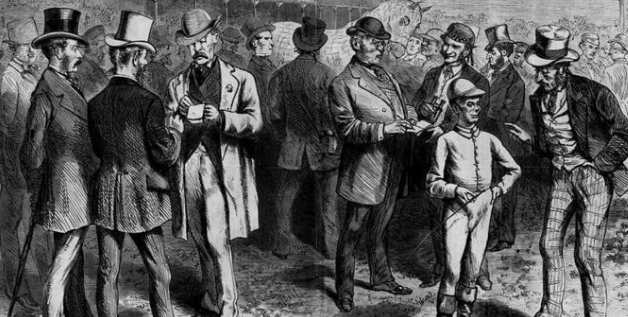
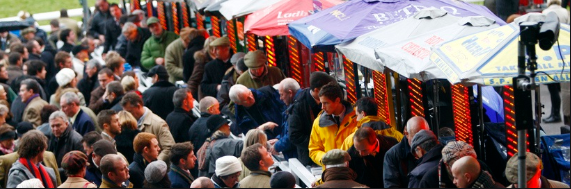
In the not so recent past people would envisage a bookmaker as the individual by the racetrack under an umbrella with a large leather bag filled with seemingly endless amounts of money. Now when people think of bookmakers their minds jump to large scale enterprises such as Paddy Power and Ladbrokes. These corporate entities have become disruptive to the traditional ‘local bookmaker’ and their access to capital has led to increased innovation in the industry.
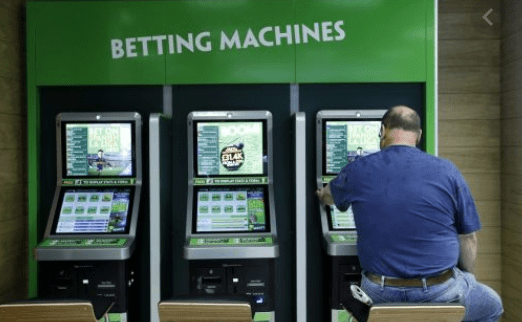
Whilst studying towards my undergraduate degree I worked in Paddy Power as a cashier. This made me realise the changing effects that digitisation was having on the industry, the need to constantly evolve with these changes became paramount as the industry competition was fierce. Although my role still largely consisted of what you would expect I also needed to learn things that people in my position 10 years ago would not have. Paddy Power continuously installed self-service terminals in their brick and mortar trade; a company executive explained, “We think more and more customers will move away from that interaction with a person in a shop” (McMahon, 2017). With the induction of these machines and the roll out of their app my role began to change; a lot of my time was spent educating customers on how to successfully operate the new machines. As well as this, I was tasked with essentially marketing all of the new casino games that were fully integrated on the mobile application.
Statistics show that this transition is affecting the landscape of the gambling industry. From the Statista (2020) graphs we can see how there is an increase in the ‘Gross Gambling Yield’ stemming from online activity and since 2014 is has become the prime source of revenue in the industry.

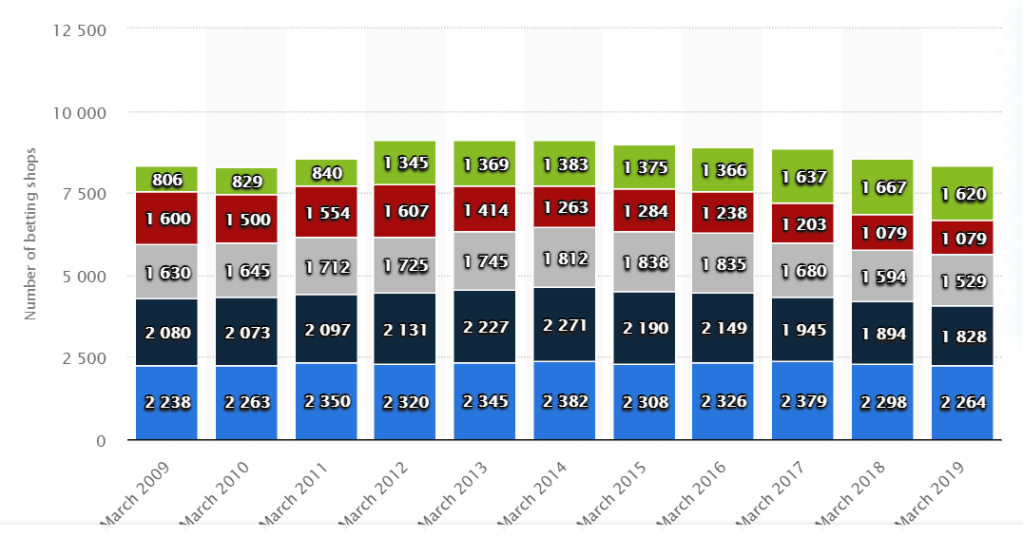
We can also see that both the number of betting shops and individuals employed in the industry is in decline in the United Kingdom. The Statista (2020) graphs below illustrate that, although nominal, the number of betting shops has been in decline since March of 2014. Similar trends are clear when looking at the number of employees employed by the industry regardless of the fact that the value of the industry is growing.
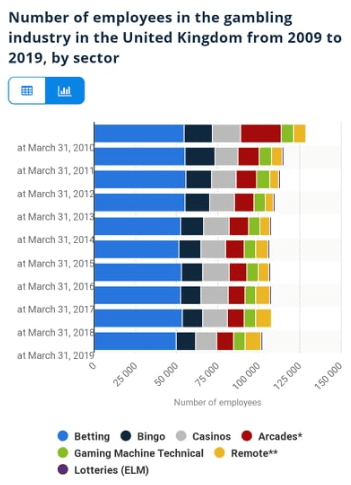
With all this information the trajectory of the industry becomes somewhat clear, continued digitisation will occur. The shop front, brick and mortar betting shop is getting phased out. This phasing out may be slow due to the a reluctancy from older customers who enjoy their traditional task of making a bet in person, but, when younger, tech savvy individuals who enjoy the world at their fingertips become the prominent client base the transition will undoubtedly speed up. What does this mean for the future? Will bookmakers refrain from offering their services on race day? Will the whole gambling industry be online? And who need Vegas when you have Vegas in your pocket?
Bibliography:
Charpentier, A. (2019). A brief history of sports betting. [online] Freakonometrics. Available at: https://freakonometrics.hypotheses.org/58041 [Accessed 14 Feb. 2020].
McMahon, C. (2017). How Paddy Power is using its brick-and-mortar bookies to push spending online. [online] Fora.ie. Available at: https://fora.ie/paddy-power-online-sales-3617878-Oct2017/ [Accessed 14 Feb. 2020].
Onlinbetting.org.uk (2020). History of Gambling, Betting and Bookmakers | First Bookies, Betting Sites and Exchanges | Evolution of British Gambling Law and The Future of Betting | Online Betting UK. [online] Onlinebetting.org.uk. Available at: https://www.onlinebetting.org.uk/betting-guides/history-of-gambling-and-bookmaking.html [Accessed 14 Feb. 2020].
Paddy Power (2020). [online] Available at: https://www.youtube.com/watch?v=U6HnbJtb9_Q [Accessed 14 Feb. 2020].
Statista (2020). Number of betting shops by operator in the UK 2009-2019 | Statista. [online] Statista. Available at: https://www.statista.com/statistics/203401/number-of-betting-shops-by-operator-in-the-uk/ [Accessed 14 Feb. 2020].
Statista (2020). Number of employees – betting industry Great Britain 2019 | Statista. [online] Statista. Available at: https://www.statista.com/statistics/468526/number-of-employees-betting-industry-in-great-britain/ [Accessed 14 Feb. 2020].
 Colin in a Digital World
Interesting read Colin- as a someone who enjoys the occasional gamble, the sheer scale of features available via the bookmaker’s applications on my phone is mind-blowing. In fact, since I’ve been of a legal age to gamble, I think I’ve only ever visited a bookies once, which was for no reason other than to experience ‘the traditional task of making a bet in person’, as you say. As more features continue to be added online, and those generations who aren’t familiar with technology make way for more tech-savvy generations, it’s seems to be a matter of when, not if, there’s no longer a requirement for the traditional brick and mortar bookmaker, which is obviously a big worry for the associated employees. That said, I do feel like there are some elements of gambling which simply cannot be digitalised- for example placing an online bet at the races just isn’t the same as the thrill of shopping around and placing a bet in the betting ring. With the pace at which the digital economy is evolving however, who knows, perhaps this will be a thing of the past in 10 years’ time.
LikeLike
Hi Colin, I couldn’t get enough of this insightful blog post, it really drew me in and I’ve learned a lot about an area I knew nothing about before.
Have you though at all about the implication of the development of artificial intelligence for the gambling industry?
In my view it could bring both positive and negative effects. Gambling companies already use big data to predict and analyse peoples behaviour, using this to develop their business model so that they make more money. Further growth of big data will give gambling companies more information to use, and development of advanced AI will allow them to use it better to target people, leading to gambling companies having an even bigger edge over their customers.
An example of this might be more specific targeting of adverts (especially in online betting), or real-time personalisation of the apps being used (Pan, 2020).
There are also positive uses for AI, one example of this could be to use AI to more effectively identify problem gamblers early on, either in casinos, or on online gambling (Horridge, 2020). Perhaps this is something that the government will make mandatory, or maybe gambling companies will implement it themselves to improve their public image.
References
Horridge, K. (2020, 02). 5 Ways A.I. & Data Will Change Online Gambling Forever. Retrieved from casino.org/: https://www.casino.org/blog/5-ways-a-i-data-will-change-online-gambling-forever/
Pan, P. (2020, 02). How Artificial Intelligence Is Shaping Online Gambling. Retrieved from medium.com: https://medium.com/datadriveninvestor/how-artificial-intelligence-is-shaping-online-gambling-539785517ac1
LikeLike